I keep seeing Feverfew being listed as a 'miracle herb' on a few sites around for things like headaches and migraines.
Now I will be honest, first off I've never used Feverfew, but there is a reason for this that I'm going to get into and it's the same reason everyone should first do their own research into any herbal supplement they want to take. I've been researching herbs for several years, so while I'm not all knowing, I do try to keep myself educated about them. Any time someone mentions something that works for xyz condition I look into everything about it, it's uses, how to grow it, how to harvest it, how to use it, and most importantly it's side effects.
Back to the Feverfew now, Feverfew is great for headaches and migraines. It works by increasing blood flow by opening blood vessels. There are other herbs that work well as well, and I'll get into them in a minute. Like most other herbs Feverfew does have other uses, but mostly it will come up as a headache medication.
Now here's the important part, Feverfew's side effects. It can cause miscarriages among pregnant women. It can cause problems if you are trying to conceive as well. If you are pregnant or trying to become pregnant avoid this herb.
For those who cannot take Feverfew other herbs do work just as well, peppermint taken as a tea can help prevent or relieve pain from migraines, as an added bonus it also helps settle upset stomachs that may result from migraines. Other mint teas also help, but to a lesser degree (I use mint teas myself personally.) I've heard catnip teas work as well, but I've never tried them myself.
Also if you are looking into a 'bee garden' avoid using this plant. Bees hate the smell of the flowers and will avoid the beds at all cost. (In one book I own it actually recommends carrying some Feverfew in your pocket if you want bees to stay away from you.) On the other hand if you want to plant something that will keep bees away then this is the herb for you.
Tuesday, November 11, 2014

Wednesday, October 22, 2014
Tiny Side Post
This really isn't farm related, but it also is.
I set up an ebay account and am selling some farm related goods on it (herbs, jams) and some not farm related stuff. Next summer the ebay account will be used to sell honey and other yummies.
The link can be found here.
I'll be doing a few gift baskets for the holidays on it as well with jams, jellies, butters, things like that. If your interested in farm yummies just keep an eye on there, I don't have a set pattern for when I list so it's random.
I set up an ebay account and am selling some farm related goods on it (herbs, jams) and some not farm related stuff. Next summer the ebay account will be used to sell honey and other yummies.
The link can be found here.
I'll be doing a few gift baskets for the holidays on it as well with jams, jellies, butters, things like that. If your interested in farm yummies just keep an eye on there, I don't have a set pattern for when I list so it's random.
Friday, September 5, 2014
The Myth of 'Vegetarian Chicken Eggs'
I'm sure almost anyone who's seen them in the store has seen eggs marked as 'vegetarian'. Now they may be chickens that are fed nothing but veggies, but I doubt it. More true to what they are is the 'Free-Range Vegetarian' tags on them, or at least the free range part. Chickens eat meat, naturally, in the wild they do. The pet chickens people have now a days eat meat still, my own birds have gone after snakes, mice, moles, small things like that they can get to. This is their choice as they free range and have 8 acres of land to roam on and eat all the grass they like. Every chicken owner will also agree their birds eat bugs; if they can get outside or if the bugs get in to the coop they'll eat them.
Why do I mention this? Because if you have a chicken that free ranges you will not stop them from going after bugs, or anything else they find tasty outside. Chickens can and will chase a bug at top speed across the ground till they catch it or the bug flies where they can't get. The minute that chicken eats that bug, that baby snake, anything like that it's not a vegetarian anymore, and no amount of talking to with a chicken will convince it not to eat something that's yummy (trust me I've tried.) So basically, if they free range, they are not vegetarian.
So what then if it just says 'vegetarian'? You have one very sick group of chickens if they're forced to be vegetarians. Chickens need protein to grow feathers, lay eggs, and be healthy chickens. Without a good source they can't do any of that, and if allowed chickens will start plucking one another's feathers and eating them to get protein, they can and will also attack, kill, and eat the weaker members of the flock. I am serious, this does happen, this is why most egg production chickens in plants have their beaks clipped. (I'm not going to get into how hens are treated in plants, you can google that if you want to.)
Basically you can't have real vegetarian chickens laying eggs, it simply wont happen. It's a good advertising ploy, but the reality is these eggs are not vegetarian.
Save yourself the money, get free range eggs. Or better yet get eggs from your local farmers markets. Most of the farmers there love their birds, and they probably treat them like pets. Sure the eggs may not be super pretty super market ones and they probably cost more but I can guarantee you the hens are happier and healthier then the ones that lay the store ones. (And remember what I've mentioned before, the healthier the hen, the healthier the egg.)
Why do I mention this? Because if you have a chicken that free ranges you will not stop them from going after bugs, or anything else they find tasty outside. Chickens can and will chase a bug at top speed across the ground till they catch it or the bug flies where they can't get. The minute that chicken eats that bug, that baby snake, anything like that it's not a vegetarian anymore, and no amount of talking to with a chicken will convince it not to eat something that's yummy (trust me I've tried.) So basically, if they free range, they are not vegetarian.
So what then if it just says 'vegetarian'? You have one very sick group of chickens if they're forced to be vegetarians. Chickens need protein to grow feathers, lay eggs, and be healthy chickens. Without a good source they can't do any of that, and if allowed chickens will start plucking one another's feathers and eating them to get protein, they can and will also attack, kill, and eat the weaker members of the flock. I am serious, this does happen, this is why most egg production chickens in plants have their beaks clipped. (I'm not going to get into how hens are treated in plants, you can google that if you want to.)
Basically you can't have real vegetarian chickens laying eggs, it simply wont happen. It's a good advertising ploy, but the reality is these eggs are not vegetarian.
Save yourself the money, get free range eggs. Or better yet get eggs from your local farmers markets. Most of the farmers there love their birds, and they probably treat them like pets. Sure the eggs may not be super pretty super market ones and they probably cost more but I can guarantee you the hens are happier and healthier then the ones that lay the store ones. (And remember what I've mentioned before, the healthier the hen, the healthier the egg.)
Friday, May 30, 2014
Chicken Facts-Egg Color
I've been, as of late coming across a few articles where whoever wrote them clearly didn't research what they were writing about. I really don't feel like creating an account at each site to comment so I'm simply going to compile the articles here, on this blog, with corrections.
Some time last month I read an article on yahoo news about egg color, if the colors matter, what it means. In the article I read it stated that brown eggs come from brown chickens, white from white chickens and that was the only difference. I will agree with the article, there is no nutrition difference between white, brown, chocolate (colored), olive, pink, or green/blue eggs.
The nutrition in the egg comes from the feed the chicken eats, and how healthy she is. It's very easy for a consumer to see how healthy their eggs are, when they crack them open what color is the yolk? Most of your store bought eggs come from hens in cages that get fed a laying feed designed to get them to lay as many eggs as possible, on these you should notice the yolk will be a light yellow color. On your true free range eggs you'll notice the color of the yolk is orange, a very bright happy shade of orange. The reason for this is because free range hens are able to eat grass, veggies, bugs, and other yummy things chickens like to eat so they have more nutrients for their eggs, plus they get out in the sun and naturally get more vitamin D. Healthier hen, brighter colored egg yolks.
Now, as for the egg color, what does that all mean? While it's true some colored hens do lay certain colored eggs, for example Road Island Reds will lay brown eggs, and White Leghorns will lay white eggs, the chicken's color does not determine the egg color. Brown Leghorns still lay white eggs, White Rocks and Road Island Whites both lay brown eggs. What then makes an egg the color it is? All brown eggs are really white. If you crack one open you'll notice inside of the shell it's white, not brown. The reason it appears brown is when hens lay eggs they 'paint' them brown. If you get a fresh laid brown egg you can sometimes wipe off the brown coloring and see the white egg underneath. It's kinda cool and I've actually done it a few times cleaning eggs from my hens. Sometimes, like a printer a brown egg layer will run low on pigment and the brown eggs will turn out speckled, lighter then normal, or half painted. Nothing is wrong with the egg, the flavor will still be fine she just 'ran out of ink'.
What about those blue/green/pink eggs then? Those eggs are really that color, if you crack one open you'll see the inside of the shell is the same color as the outside of the shell. This is due to a genetic trait in that breed of chicken due to selective breeding. Nothing is wrong with the eggs the hens are just breed to lay them that way.
Some time last month I read an article on yahoo news about egg color, if the colors matter, what it means. In the article I read it stated that brown eggs come from brown chickens, white from white chickens and that was the only difference. I will agree with the article, there is no nutrition difference between white, brown, chocolate (colored), olive, pink, or green/blue eggs.
The nutrition in the egg comes from the feed the chicken eats, and how healthy she is. It's very easy for a consumer to see how healthy their eggs are, when they crack them open what color is the yolk? Most of your store bought eggs come from hens in cages that get fed a laying feed designed to get them to lay as many eggs as possible, on these you should notice the yolk will be a light yellow color. On your true free range eggs you'll notice the color of the yolk is orange, a very bright happy shade of orange. The reason for this is because free range hens are able to eat grass, veggies, bugs, and other yummy things chickens like to eat so they have more nutrients for their eggs, plus they get out in the sun and naturally get more vitamin D. Healthier hen, brighter colored egg yolks.
Now, as for the egg color, what does that all mean? While it's true some colored hens do lay certain colored eggs, for example Road Island Reds will lay brown eggs, and White Leghorns will lay white eggs, the chicken's color does not determine the egg color. Brown Leghorns still lay white eggs, White Rocks and Road Island Whites both lay brown eggs. What then makes an egg the color it is? All brown eggs are really white. If you crack one open you'll notice inside of the shell it's white, not brown. The reason it appears brown is when hens lay eggs they 'paint' them brown. If you get a fresh laid brown egg you can sometimes wipe off the brown coloring and see the white egg underneath. It's kinda cool and I've actually done it a few times cleaning eggs from my hens. Sometimes, like a printer a brown egg layer will run low on pigment and the brown eggs will turn out speckled, lighter then normal, or half painted. Nothing is wrong with the egg, the flavor will still be fine she just 'ran out of ink'.
What about those blue/green/pink eggs then? Those eggs are really that color, if you crack one open you'll see the inside of the shell is the same color as the outside of the shell. This is due to a genetic trait in that breed of chicken due to selective breeding. Nothing is wrong with the eggs the hens are just breed to lay them that way.
Tuesday, May 13, 2014
Incubator Life Hack
For those who like to run incubators to hatch their own chicks, ducks, and the like. I thought of this while cleaning my incubator to run another batch today, it's a simple one that I'm not sure many people have thought to do.
For those who use regular, not digital thermometers, before you put it in your incubators place it in a ziplock bag (make sure it's clean), once you've run the incubator and hatched your babies simply take the thermometer out of the bag, throw out the bag and you've got a nice clean thermometer you can reload into a bag for the next batch. It makes cleaning them a lot easier since babies tend to crawl over everything while they dry off.
For those who use regular, not digital thermometers, before you put it in your incubators place it in a ziplock bag (make sure it's clean), once you've run the incubator and hatched your babies simply take the thermometer out of the bag, throw out the bag and you've got a nice clean thermometer you can reload into a bag for the next batch. It makes cleaning them a lot easier since babies tend to crawl over everything while they dry off.
Wednesday, May 7, 2014
Good Place For a Nap
On top of my other brothers and sisters that didn't hatch yet of course...
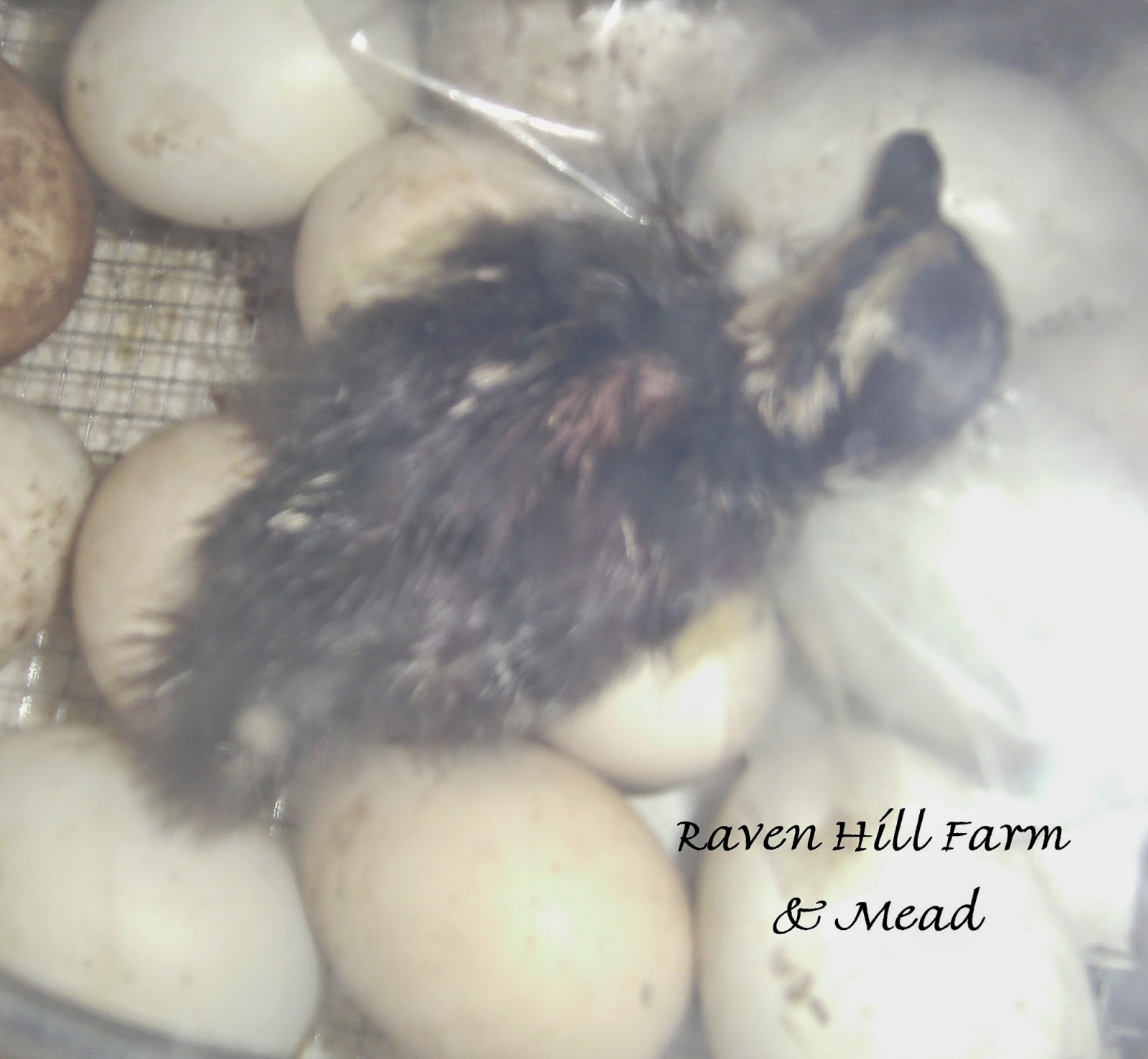
My Rouen and Pekin duckies are finally proud parents to a bunch of peeping babies. They're a mixed breed mostly though so they should be interesting growing up (I'll be sure to take a lot of pictures of them since I noticed not to many pictures Rouen/Pekin mixes online.)
Saturday, April 19, 2014
Spring Time Tease
If my weather is like anyone else's then you know what's going on here, nice warm weather one week then suddenly frost the next. The frost decided to happen the day the Farmer's Almanac called for the last frost day, and the next few days after. I didn't start putting in my veggies yet so I didn't loose anything there, though I did put in some flowers for butterflies and bees but those appear fine. My herbs are by luck still in pots inside, I simply haven't had time to finish the raised beds they will go into.
As for the fruit trees... The frost hit the day after my apple tree's blossomed. The peaches and crab apple blossoms have already come and gone. I'm not sure what this will mean for the fall fruit harvest (I need all the apples and peaches I can get for more butters.) I also have noticed a lack of bees with the cold snap. Before the temps dropped I saw bees everywhere, now I haven't seen them most of this week.
The weather fooled my out door barn cats too I noticed. Last week we had temperatures in the 80s-90s, and the cats started to shed their winter coats.
Kind of hoping spring decides to come back so I can finish getting my flowers in, and get the rest of my gardens in before it's to late.
As for the fruit trees... The frost hit the day after my apple tree's blossomed. The peaches and crab apple blossoms have already come and gone. I'm not sure what this will mean for the fall fruit harvest (I need all the apples and peaches I can get for more butters.) I also have noticed a lack of bees with the cold snap. Before the temps dropped I saw bees everywhere, now I haven't seen them most of this week.
The weather fooled my out door barn cats too I noticed. Last week we had temperatures in the 80s-90s, and the cats started to shed their winter coats.
Kind of hoping spring decides to come back so I can finish getting my flowers in, and get the rest of my gardens in before it's to late.
Subscribe to:
Posts (Atom)